What is Bandhani? History, Process & Cultural Importance of Rajasthan’s Tie-Dye Art
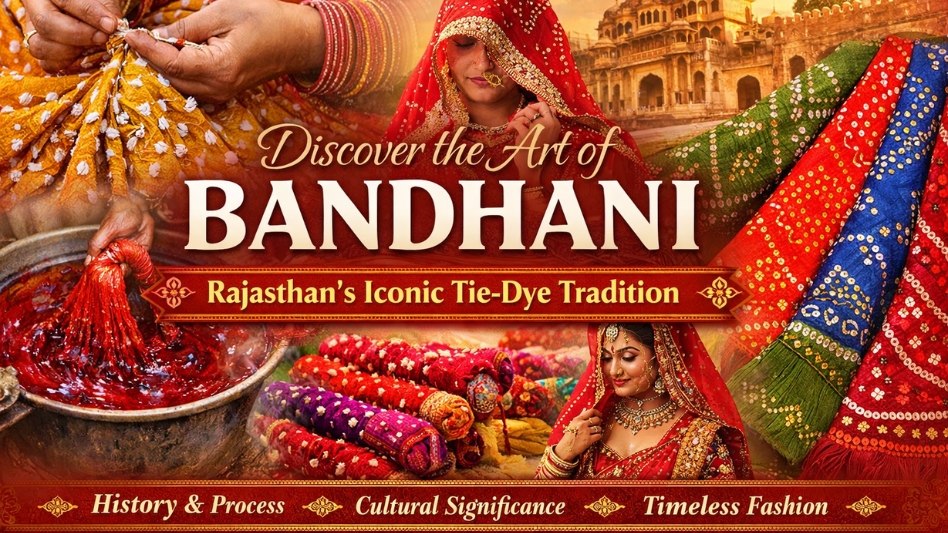
Discover the vibrant world of Bandhani, Rajasthan’s iconic tie-dye art known for its intricate hand-tied patterns and rich cultural heritage. This detailed guide explores the history of Bandhani, its traditional dyeing process, symbolic colors, and its deep-rooted importance in Rajasthani weddings and festivals. Learn how this centuries-old textile craft continues to inspire modern fashion while preserving India’s timeless handloom legacy.
India’s textile heritage is a treasure trove of colors, craftsmanship, and centuries-old traditions. Among its most celebrated art forms is Bandhani, the vibrant tie-dye technique that has become a cultural symbol of Rajasthan. Known for its intricate patterns and radiant hues, Bandhani is more than just fabric—it is a story of heritage, identity, and artistic mastery.
In this detailed guide, we explore what Bandhani is, its history, the step-by-step process, and the cultural importance of Rajasthan’s tie-dye art, along with why it continues to dominate modern fashion.
What is Bandhani?
Bandhani (also known as Bandhej) is a traditional Indian tie-dye textile art that involves tying small portions of fabric with thread before dyeing it to create distinctive patterns. The word “Bandhani” comes from the Sanskrit word “Bandh”, which means to tie.
This ancient resist-dyeing technique produces beautiful dotted patterns, waves, stripes, and elaborate motifs on fabrics like cotton, silk, georgette, and chiffon.
Today, Bandhani sarees, dupattas, lehengas, and turbans are iconic elements of Rajasthani and Gujarati attire.
History of Bandhani
The history of Bandhani dates back over 5,000 years.
Ancient Origins
References to tie-dye techniques similar to Bandhani can be found in the Indus Valley Civilization.
Historical evidence suggests that Bandhani was practiced as early as 4000 BCE.
The art flourished in western India, especially in Rajasthan and Gujarat.
Royal Patronage
During medieval times, Bandhani received royal support from Rajput kings. Royal families favored Bandhani textiles for weddings, festivals, and ceremonial occasions.
Cities like:
Jodhpur
Jaipur
Udaipur
Bikaner
became major hubs of Bandhani craftsmanship.
Over generations, artisan communities preserved and refined this intricate craft, passing it down as a family tradition.
The Traditional Bandhani Process (Step-by-Step)
One of the most fascinating aspects of Bandhani is its labor-intensive process. Each piece can take days—or even weeks—to complete.
1. Fabric Selection
The process begins with selecting suitable fabric:
Cotton (for daily wear)
Silk (for festive wear)
Georgette & chiffon (for lightweight drapes)
The fabric is washed thoroughly to remove starch and impurities.
2. Designing the Pattern
Artisans lightly mark the fabric with patterns using washable ink. Traditional Bandhani patterns include:
Dots (Ek Dali)
Waves (Leheriya)
Squares (Chandrokhani)
Shikari motifs
3. Tying (The Core Technique)
This is the heart of Bandhani art.
Skilled artisans pinch tiny portions of cloth.
Each section is tightly tied with thread.
Thousands of tiny knots are created by hand.
The tighter the knots, the more precise the design.
4. Dyeing the Fabric
The tied fabric is dipped into natural or synthetic dyes.
Light colors are dyed first.
The fabric is dried.
Additional tying may be done for multi-colored designs.
It is then dyed again in darker shades.
Traditional Bandhani colors include:
Red (symbol of marriage)
Yellow (happiness)
Green (prosperity)
Blue (divinity)
Maroon (festivity)
5. Drying & Opening the Knots
Once dried, the threads are carefully removed, revealing stunning dotted patterns. The tied areas resist the dye, forming intricate designs.
Each Bandhani piece is unique because the knots are tied by hand—no two pieces are identical.
Types of Bandhani in Rajasthan
Rajasthan offers several distinctive Bandhani styles:
1. Leheriya
Leheriya features diagonal wave patterns and is especially popular during monsoon festivals. It is commonly worn as turbans and sarees.
2. Mothra
A variation of Leheriya, Mothra includes a grid-like pattern created by cross-dyeing.
3. Ek Dali Bandhani
Characterized by single dot clusters forming simple, elegant patterns.
4. Shikari Bandhani
Highly intricate designs depicting animals, birds, and nature scenes.
Cultural Importance of Bandhani in Rajasthan
Bandhani is deeply rooted in Rajasthani traditions and rituals.
1. Symbol of Marriage
In Rajasthan:
Brides traditionally wear red Bandhani sarees or lehengas.
Bandhani dupattas are gifted during wedding ceremonies.
It symbolizes good fortune and marital bliss.
2. Festival Wear
Bandhani is widely worn during:
Teej
Gangaur
Diwali
Navratri
It reflects joy, celebration, and community identity.
3. Identity & Community
Different patterns and colors signify:
Marital status
Regional identity
Social community
For example:
Newly married women often wear bright red Bandhani.
Yellow Bandhani is worn by new mothers.
Bandhani in Modern Fashion
Bandhani has gracefully transitioned from traditional attire to contemporary fashion.
Today, designers incorporate Bandhani into:
Indo-western gowns
Kurtis
Jackets
Scarves
Contemporary sarees
Indian and international fashion designers have revived Bandhani on global runways, promoting sustainable and handcrafted textiles.
Economic Importance of Bandhani
Bandhani supports thousands of artisan families in Rajasthan. It plays a vital role in:
Rural employment
Women empowerment
Handloom industry growth
Export of Indian handicrafts
Government initiatives and fashion awareness campaigns continue to promote authentic handmade Bandhani.
How to Identify Authentic Bandhani
With machine-made imitations in the market, here’s how to spot real Bandhani:
Uneven dots (a sign of hand tying)
Visible thread marks
Soft fabric texture
Slight color variations (proof of hand dyeing)
Authentic Bandhani carries the warmth of human craftsmanship.
Why Bandhani is Timeless
Bandhani remains relevant because it combines:
Heritage craftsmanship
Vibrant aesthetics
Cultural symbolism
Sustainable practices
It represents the artistic soul of Rajasthan—colorful, resilient, and deeply traditional.
Conclusion
So, what is Bandhani?
Bandhani is not just a tie-dye technique—it is a living tradition of Rajasthan that reflects centuries of history, culture, and craftsmanship. From royal courts to modern fashion ramps, Bandhani continues to captivate hearts with its intricate knots and vibrant colors.
As global fashion increasingly values sustainability and handmade artistry, Rajasthan’s Bandhani art stands tall as a symbol of India’s rich textile heritage.